Gut Health Supplement Stack vs Meal Replacements: Cost and Results
Quick answer
A meal replacement substitutes for food you were already buying, so its true cost is the difference between the shake and the meal it displaced — often close to nothing. A gut health supplement stack is purely additive: every jar is a new charge that removes nothing from the grocery list, and four products bought together make it impossible to tell which one earned its place. On evidence, structured meal replacement programmes have the stronger human research record; multi-product stacks are almost never studied as stacks at all.
- Cheaper in practice: the meal replacement, because it subtracts a meal instead of adding a purchase.
- Better evidence: meal replacement programmes, mostly because they remove decisions rather than because of the powder.
- Biggest hidden cost of a stack: duplicated ingredients and no way to attribute a result.
These two approaches get compared as if they were rivals for the same money, and in a sense they are. But they solve different problems. A meal replacement is an answer to "I make bad decisions at 1pm". A supplement stack is an answer to "I think something is missing". Most people who buy both are quietly hoping one of them turns out to be the answer to both, and that is where the money goes.
What each one is actually replacing
This is the question that decides the cost comparison, and almost nobody asks it. A meal replacement replaces a meal. If you were going to spend money on lunch anyway, the shake's cost is not its price — it is the gap between the shake and the sandwich. For people who habitually buy lunch out, that gap is frequently negative, which is to say the shake saves money.
A supplement stack replaces nothing. The fibre powder does not remove the grocery shop. The probiotic does not remove the fibre powder. Each product is an addition, and additions compound: four products on subscription is four renewal dates, four shipping charges and four opportunities to forget you are paying for something you stopped taking in March.
That asymmetry is the single most useful thing to understand before you compare anything else, and it is why a stack has to clear a much higher bar to be worth it.
What a meal replacement does well
Its real mechanism is not nutritional, it is behavioural. A fixed portion in a sealed package removes the decision, removes the portion estimate and removes the drift that turns a modest lunch into a large one. Structured programmes built around them have a reasonable record in human trials, and the reason repeatedly given in the literature is adherence and simplicity rather than anything remarkable in the formulation.
They are also usually fortified, which matters if you were going to build your own stack anyway. A fortified shake often contains the vitamins and minerals people buy separately, at doses printed on the panel, in one purchase. That is a genuine argument, and it is rarely made because nobody profits from making it.
The weaknesses are equally clear. They are monotonous. They teach you nothing about portioning real food, so the results tend to reverse when you stop unless there was a plan for stopping. And they are food, so they are subject to the same rule as anything else: two shakes on top of three normal meals is not a deficit, it is an addition.
What a gut health supplement stack does well
A gut health supplement stack usually means some combination of a fibre powder, a probiotic, a digestive enzyme blend and something botanical — ginger, peppermint oil, dandelion. Bought individually and used deliberately, the components can be sensible. Fibre has the best case of the four, and a named probiotic strain with published trials behind it is a reasonable purchase if you have a specific reason for it.
The trouble starts at the word "stack". Products are studied one at a time, at defined doses, in defined populations. A four-product stack has never been tested as a four-product stack, so its combined effect is a hypothesis rather than a finding. Add that most blends are proprietary and you end up unable to say what dose of anything you are taking.
If you want to build one anyway, build it one product at a time with four weeks between additions. That is slower than the marketing wants and it is the only version of stacking that produces information.
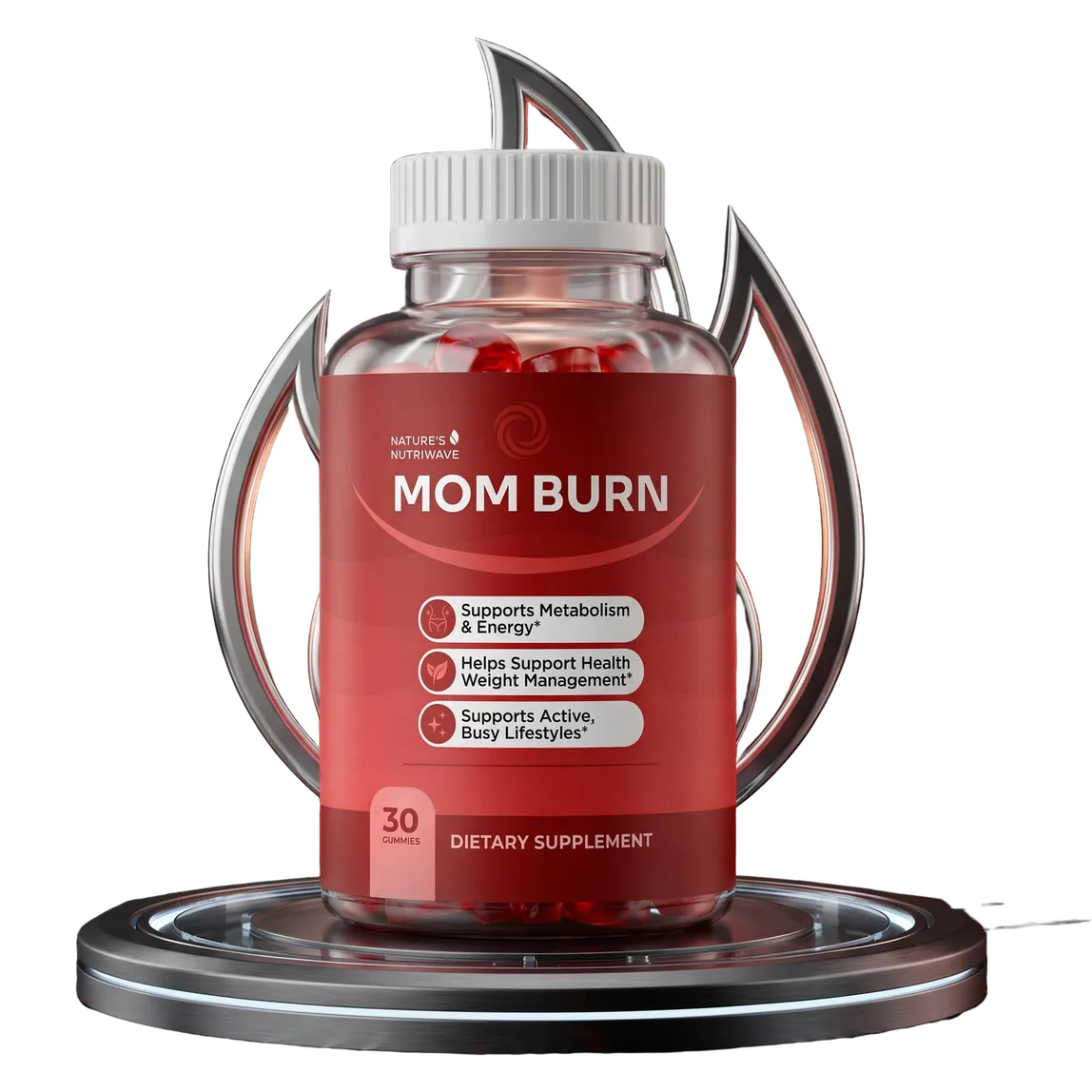
Considering MomBurn as the one product?
A single gummy is a smaller commitment than a four-jar stack. Here is where to buy it and check the current MomBurn price and bundle options on the official store.
See Official PricingThe comparison table nobody runs
Costs below are described as patterns rather than figures, because prices move constantly and vary by country and by seller. What does not move is the shape of the comparison.
| Point of comparison | Meal replacement | Four-product supplement stack | Cooked meal from groceries |
|---|---|---|---|
| What it removes from the bill | One meal per serving | Nothing | Restaurant and convenience spending |
| Net ongoing cost | Often close to neutral | Purely additive, multiplied by product count | Lowest per meal, highest in time |
| Decisions required per day | Almost none | Several, at set times | Many |
| Evidence strength | Reasonable for structured programmes | Per-ingredient only; never tested as a stack | Strongest, and least profitable to sell |
| Attribution if it works | Clear — one variable changed | Impossible — four variables changed | Clear if changes are gradual |
| Main failure mode | Boredom, and no plan for stopping | Duplicate ingredients and forgotten subscriptions | Time, energy and planning |
| Skill it builds | None | Label literacy, if you read them | Portioning and cooking, which last |
The most expensive supplement is the one you keep renewing because you cannot tell whether it is working. Buying four at once guarantees that outcome.
The stacking trap: duplication and upper limits
When several products arrive at once, the doses add up in ways the packaging never shows you. Magnesium appears in sleep formulas, electrolyte blends, multivitamins and mineral-salt products. B vitamins appear in energy powders and greens blends. Caffeine hides behind green tea extract and guarana on labels that never use the word.
Some of that overlap is harmless. Some of it is not: fat-soluble vitamins accumulate, iron has a meaningful upper limit and is genuinely dangerous in overdose, and stacked stimulants are the most common reason a person feels strange after starting three products in one week. The fix is unglamorous. Lay every label on the table, list the ingredients that appear more than once, and add up the milligram figures before the first dose rather than after.
The second half of the trap is disclosure. If a stack contains two proprietary blends, you cannot do that arithmetic even if you want to, because the per-ingredient amounts are not published. A product that will not tell you what is in it cannot be safely combined with anything.

What neither approach can do
Neither a shake nor a stack can diagnose, treat, cure or prevent any disease, and neither is a substitute for medical care or for a conversation with a pharmacist if you take prescription medication. Fibre and mineral products in particular can affect how some medicines are absorbed, and the timing question is worth two minutes of a professional's attention.
Neither can create a calorie deficit by itself. A meal replacement helps only if it actually replaces a meal rather than joining one. A supplement adds nothing to the deficit at all; the honest version of the weight claim is that some ingredients may support appetite or fullness modestly, and the evidence for most of them is thin. And neither survives contact with a schedule they were not designed for: the best programme in the world fails on the week you travel, and a plan that assumes you will never travel is not a plan.
Finally, neither builds a skill. When the shakes stop, the portioning problem is exactly where you left it. That is the strongest argument for spending at least part of the budget on food you cook, however unfashionable that is as a recommendation on a page like this one.
A cheaper way to test either one
- Buy the smallest size first. The bulk discount is only a discount if the product turns out to be worth taking.
- One product, four weeks, two lines a day. Note energy, digestion and whether you actually took it. Four weeks of notes beats an opinion formed on day three.
- Replace, do not add. If you are trying a meal replacement, it must displace a meal. If it joins your usual meals, you have bought a snack.
- Check the overlap before the second product. Compare panels for magnesium, B vitamins, caffeine and vitamin D before adding anything to an existing routine.
- Fix the fibre gap with food where you can. The companion piece on a fibre supplement versus eating more vegetables lays out what a scoop does and does not replace, and the piece on spore-based versus standard probiotic formulas covers the one component of a stack where the format genuinely changes what you are buying.
Where a single gummy like MomBurn fits
MomBurn is an apple cider vinegar and BHB gummy with calcium, magnesium and sodium mineral salts. It is not a meal replacement, it contains no fibre and no probiotic strains, and it is not a gut health supplement stack — it is one product with a short ingredient list. That is worth saying plainly, because the ingredient list is also where it can be criticised: the official page publishes no milligram amounts, so the overlap arithmetic described above cannot be done for it either.
What a single product does have in its favour is attribution. One thing changed means you can tell whether anything changed. If you are weighing up the best gut health supplement options on one hand and a fat-burning gummy on the other, the sober framing is that they are different categories with different evidence, and that whichever you pick, the weight loss supplement price you should be comparing is the cost of an honest four-week trial rather than the cost of a year's supply bought on day one.

See the current MomBurn price
Official store pricing, free US shipping on 3 and 6 bottles, 60-day money-back guarantee.
Order NowFrequently asked questions
Is a meal replacement cheaper than a supplement stack?
Almost always, because a meal replacement takes the place of food you were going to buy anyway, so its real cost is only the difference between the shake and the meal it replaced. A supplement stack is purely additive: every product is a new line on the bill that removes nothing from the grocery list.
How many supplements is too many at once?
There is no fixed number, but past two or three products you lose the ability to tell which one is doing anything, and the odds of doubling up on the same ingredient rise sharply. Magnesium, vitamin D, B vitamins and caffeine turn up across several categories, so read every label as one combined dose rather than as separate purchases.
Do meal replacement shakes work for weight loss?
Structured meal replacement programmes have a reasonable body of human research behind them, mostly because they remove decisions and make portions fixed rather than because of anything special in the powder. The evidence weakens considerably once the shakes stop, which is why the exit plan matters more than the product.
Should I take a supplement stack and a meal replacement together?
You can, but starting both in the same week means you will never know which one earned its place. Most meal replacement powders are already fortified with vitamins and minerals, so adding a multivitamin on top is often duplication. Start one, give it about four weeks, then decide.
References
- NIH Office of Dietary Supplements — Dietary Supplements for Weight Loss
- NCCIH (NIH) — Dietary and Herbal Supplements
- Harvard T.H. Chan School of Public Health — The Healthy Eating Plate
- Mayo Clinic — Weight loss: 6 strategies for success
- PubMed — randomised trials of meal replacements (search results)