Gut Health Supplements Debloat vs Eating More Vegetables: What Actually Changes
Quick answer
A fibre supplement raises your fibre intake in one measured scoop, which is the fastest way to close a gap and the easiest thing to stick to. Eating more vegetables raises fibre more slowly but brings water, potassium, polyphenols, chewing time and the food it displaces from your plate along with it. Whether gut health supplements debloat you at all depends on which fibre you pick: gel-forming fibres tend to help when bloating travels with constipation, while highly fermentable fibres often make gas worse for a week or two first.
- Fastest and most measurable: a fibre supplement, especially psyllium or methylcellulose.
- Best for everything fibre is not: vegetables, legumes, fruit and whole grains.
- Most common mistake: adding a large dose of fermentable fibre overnight and blaming your gut for the result.
The choice is usually presented as discipline versus convenience, which is not what it is. A scoop and a plate of roast vegetables do different jobs, and they fail in different ways. One is precise and narrow. The other is imprecise, broad, and much harder to do consistently on a Tuesday night. It is worth knowing what each one actually changes before deciding which problem you are solving.

What bloating actually is
Bloating is a sensation of pressure or fullness. Distension is a visible increase in girth. They often occur together and they are not the same thing, which is why a product that changes the number on a tape measure has not necessarily changed how you feel, and vice versa.
The usual drivers are unglamorous: swallowed air, gas produced when bacteria ferment carbohydrate that arrives undigested in the colon, slow transit and stool sitting in the rectum, fluid shifts around the menstrual cycle, a very salty meal, and a nervous system that reports normal gas volumes as painful. That last one matters more than people expect — two people can hold the same volume of gas and rate it completely differently.
Notice what is missing from that list: fat gain. Bloating arrives over hours and leaves over hours. Anything sold on an overnight before-and-after photograph is showing you distension and water, not tissue.
What a fibre supplement actually does
Fibre supplements are not one thing, and the differences are the whole story:
- Psyllium husk is soluble and gel-forming, and is only partly fermented. It holds water, bulks and softens stool, and in trials it is the fibre most often associated with easier, more regular bowel movements without a large gas penalty.
- Methylcellulose is a synthetic bulking fibre that is essentially not fermented at all, so it produces very little gas. It also does not feed your bacteria, which is the trade-off.
- Inulin, chicory root fibre and FOS are highly fermentable prebiotics. They feed bacteria well, which is the point, and they generate gas doing it. These are the fibres most likely to make bloating worse in the short term, and they are extremely common in "gut health" powders and bars.
- Partially hydrolysed guar gum sits in between: soluble, fermentable, but slowly, which tends to mean less abrupt gas.
Amounts studied in trials typically sit in the range of about five to ten grams a day for psyllium and roughly five grams a day for guar gum, with inulin studied across a wider spread. Those are study conventions rather than prescriptions, and the practical point is that the first week matters more than the dose: the same amount introduced over two weeks feels very different from the same amount introduced on Monday.
What vegetables do that a scoop cannot
Vegetables deliver fibre, but that is the least interesting part. They arrive with water, which matters because fibre without fluid is the classic recipe for feeling worse. They carry potassium, which shifts the sodium balance that drives a good share of day-to-day puffiness. They bring polyphenols and a physical food matrix that a milled powder has lost. They take time to chew, which affects how much you eat afterwards.
Most importantly, they occupy space. A plate that is half vegetables is a plate with less of something else on it, and that displacement is a real mechanism that no capsule reproduces. If your interest here is body weight rather than comfort, this is the part that does the work.
The catch is consistency. A supplement is one decision a day. Vegetables are a decision at every meal, on the days you are tired, travelling or cooking for someone who dislikes them. That is not a moral failing; it is a design problem, and it explains why the powder exists at all.
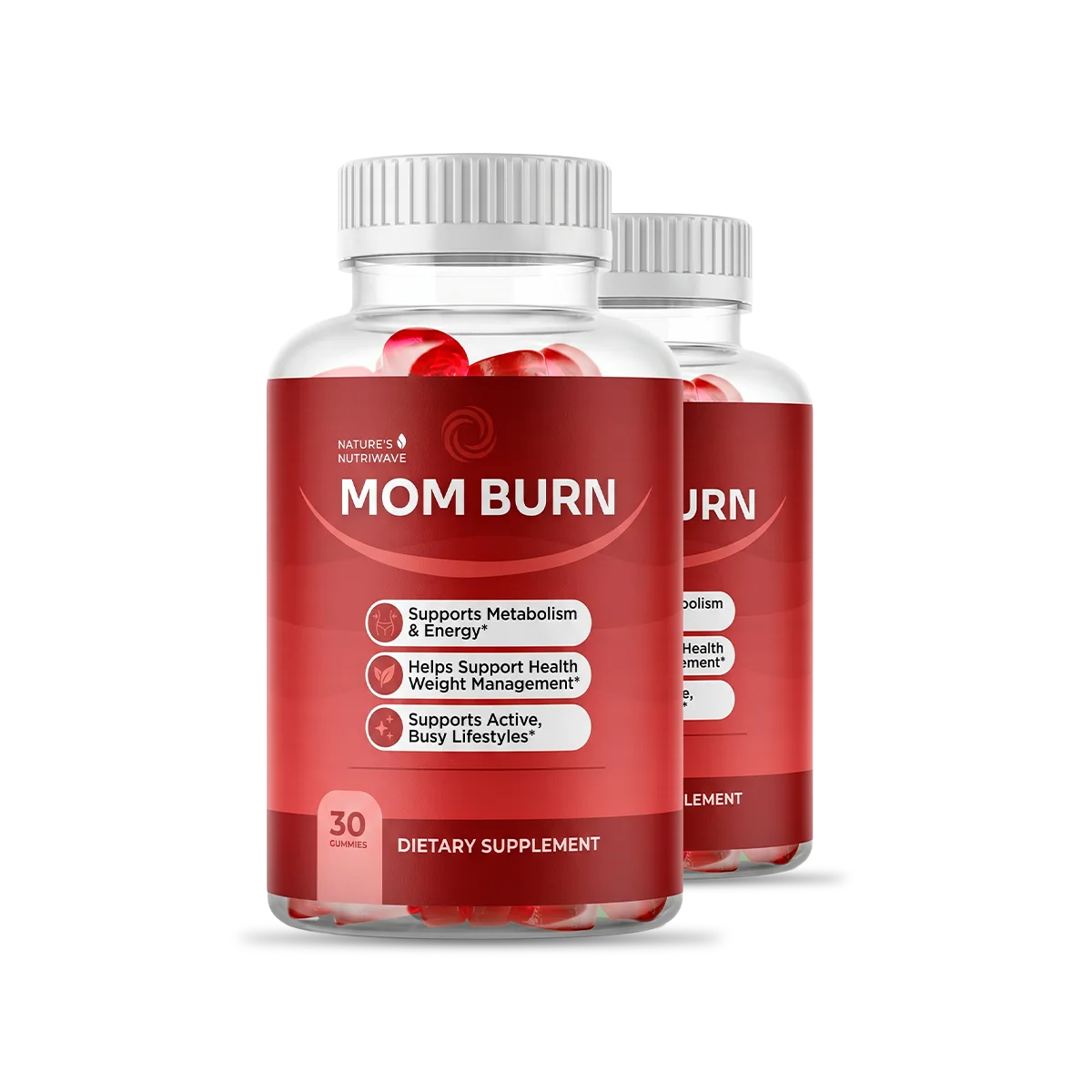
Shopping the gummy aisle instead?
MomBurn is an apple cider vinegar and BHB gummy, not a fibre product. If that is what you came for, this is where to buy it and see the current apple cider vinegar gummies price on the official store.
See Official PricingSide by side: forms, doses and what the evidence supports
The table compares the practical properties rather than the marketing. The evidence column describes how much good human research exists for the specific claim of easing bloating or improving regularity — not how loudly the category is advertised.
| Option | Type | Amount commonly studied | Gas tendency | Evidence strength | Ongoing cost pattern |
|---|---|---|---|---|---|
| Psyllium husk | Soluble, gel-forming, low fermentation | About 5–10 g/day | Low to moderate | Reasonable for regularity; moderate for comfort | Low per serving; cheapest of the powders |
| Methylcellulose | Synthetic bulking fibre, not fermented | Label-directed, typically a few grams | Very low | Reasonable for bulking; nothing for the microbiome | Low to moderate |
| Inulin / chicory root / FOS | Highly fermentable prebiotic | Studied across a wide range | High, especially in week one | Good for feeding bacteria; poor for short-term comfort | Low, and often hidden inside other products |
| Partially hydrolysed guar gum | Soluble, slowly fermented | Around 5 g/day | Moderate | Modest but reasonably consistent | Higher per gram |
| Vegetables, legumes, fruit | Mixed fibres plus water and minerals | Part of a 25–38 g/day total | Variable; legumes highest | Strongest overall body of evidence | Grocery cost, plus preparation time |
Fibre is the one supplement where "more, faster" is reliably the wrong instruction. Almost every bad first week is a dosing schedule problem, not an intolerance.
Do gut health supplements debloat, or just say so?
Here is the honest position. When bloating travels with constipation, a gel-forming fibre plus enough fluid has a plausible mechanism and a reasonable evidence base behind it, and many people notice a difference within a couple of weeks. When bloating is driven by fermentation, adding a fermentable fibre is working against yourself in the short term, however good it may be for the microbiome over months.
The specific marketing claim that gut health supplements debloat within days is largely unsupported. Products in the "debloat" category typically mix a small amount of fibre with dandelion, ginger, digestive enzymes and a mild diuretic effect, and the visible result in a photograph is fluid. Searches for the best gut health and debloat supplement return a long list of formulations, and very few of them have been tested as formulations at all — the individual ingredients have, sometimes, at doses the finished product may not contain.
That does not make the category worthless. It makes the honest expectation "modest, gradual and dependent on which fibre you chose", which is not what the packaging says.

How to add fibre without buying a worse week
- Start at roughly a third of the label dose and hold it for three or four days before moving up. Most of the misery attributed to fibre is a step change, not the fibre.
- Drink more water than feels necessary. Gel-forming fibre without fluid is the single most common way to turn a bulking agent into a blockage.
- Pick your fibre for your symptom. Constipation-linked bloating points towards psyllium. Gas-dominant bloating points away from inulin, at least at first.
- Change one thing. If you start a fibre supplement and a probiotic in the same week you will learn nothing about either; the companion piece on spore-based versus standard probiotic formulas explains why the strain, not the timing, is what you should be comparing there.
- Give it four weeks and write it down. Digestive comfort is noisy enough that memory will tell you whatever story you already believe.
What neither option can do
Neither a fibre supplement nor a bigger salad can diagnose, treat, cure or prevent any condition, and neither should be used to postpone a proper assessment. Bloating that is new and persistent, or that arrives with unexplained weight loss, blood, fever, vomiting, severe pain or a bowel habit change that will not settle, is a reason to see a clinician. That is not hedging; it is the one genuinely important sentence on this page.
Neither will produce overnight results. Neither reliably reduces body fat on its own — fibre can help with fullness and there is decent evidence that higher-fibre eating patterns track with better weight outcomes, but that is a pattern over months, not a scoop with an effect. And neither works for people with certain conditions where specific fibres are actively unhelpful, which is a conversation with a dietitian rather than a purchase decision.
Where MomBurn sits in this
Clearly, and to be fair to the reader: not in this comparison. MomBurn is an apple cider vinegar and BHB gummy with calcium, magnesium and sodium mineral salts. It contains no psyllium, no inulin and no fibre blend, so it is not competing with a fibre supplement and it will not do a fibre supplement's job. Anyone searching for the best fibre supplement for gut health and weight loss is in a different aisle.
What the two shelves share is a tendency to be sold with the same photograph. If you want the comfort effect, buy fibre and ramp it slowly. If you want the vinegar mechanism, that is a separate decision with its own evidence, covered in the piece on gummies versus liquid vinegar. Buying both in the same week only guarantees you will not know which one did anything.

See the current MomBurn price
Official store pricing, free US shipping on 3 and 6 bottles, 60-day money-back guarantee.
Order NowFrequently asked questions
Will a fibre supplement make me less bloated straight away?
Usually not, and it may briefly do the opposite. A gel-forming fibre such as psyllium tends to help when bloating travels with constipation, but the effect builds over days rather than hours. A fermentable fibre such as inulin or chicory root feeds gas-producing bacteria and commonly increases wind and pressure for the first week or two before it settles.
Is a fibre supplement as good as eating vegetables?
For the single job of raising fibre grams, a supplement works and is far easier to measure. For everything else that comes with vegetables, including water, potassium, polyphenols, chewing time and the food they displace from the plate, a scoop of powder is not a substitute. Most people do best treating the supplement as a floor, not a replacement.
How much fibre should I be aiming for?
Widely used general targets sit at roughly 25 grams a day for adult women and 38 grams for adult men, and most adults in Western countries fall well short of that. Getting closer to the target matters more than the source, but adding the last ten grams as food usually causes less discomfort than adding it as powder.
Can bloating be a sign of something that needs a doctor?
Yes. Bloating that is new and persistent, or that comes with unexplained weight loss, blood, fever, vomiting, severe pain or a change in bowel habit that will not settle, is a reason to see a clinician rather than to try another supplement. Dietary supplements are not intended to diagnose, treat, cure or prevent any condition.